
Thoracic Spine Stiffness

The thoracic spine is made up of 12 vertebrae that sit in-between the neck and the lumbar area. This is often an area of neglect as most people complain of neck or low back pain or problems.

Poor posture is a big contributor to causing problems in the spine. Some people will naturally slump forward in sitting causing the thoracic spine to become hunched forward or kyphosed. We are also a society of desk-based workforce.

People with neck problems may experience pain on turning, lifting or bending the neck. As the neck spine (cervical spine) is directly connected to the thoracic spine, you could start to compensate movement by keeping the thoracic spine rigid to allow more movement in the neck. It is important to not just work on the neck mobility but also the mobility of the thoracic spine.

The thoracic spine helps us to lift our arms as the shoulder blades sit within the thoracic spine. Shoulder problems can cause reduced mobility at the shoulder level, which will directly affect the thoracic spine. It is therefore vital to exercise the thoracic spine as well as the affected shoulder joint. It may be necessary to mobilize individual joints in the thoracic spine by a qualified physiotherapist. This will help to increase the range of movement in the spine, which will in turn help to mobilize the shoulder.

Similarly those who suffer with low back problems will compensate in their thoracic spine. It may be possible that the lumbar spine needs to arch more in order to get more movement. This might cause you to “hinge” move at the junction between the thoracic and lumbar spine.

In most cases, simple stretches, rotation and exercises can help to mobilize the thoracic spine. Various other treatments may be needed to help the spine move better which include trigger point treatment, deep tissue massage, joint mobilization, ultrasound, TENS, acupuncture, stretches and exercise.

Therapists at Silver Physio can help with any spinal problem or pain and we are able to see you in the comfort of your home to assess and treat your individual problem. We could also visit at your workplace to assess desk positioning.

Please contact us for an assessment and further advice.

To arrange a home visit and get your treatment started ASAP, email us at office@silverphysio.co.uk or telephone: 020 3637 8988.

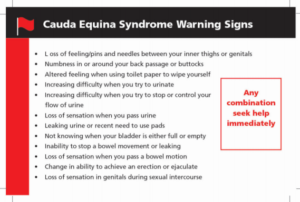
Cauda equina syndrome – be in the know

Cauda equina syndrome (CES) is a rare condition, occurring in one to three in every 100,000 people. Up to two people in every 100 with a disc bulge may develop the condition so it’s important that our patients know what to look out for if they have low back pain. Because CES is described as a medical emergency, early intervention is very important to avoid irreversible damage, such as bladder and bowel dysfunction, and sexual dysfunction.

There is no agreed definition of CES but the British Association of Spinal Surgeons’ definition states: ‘A patient presenting with acute back pain and/or leg pain with a suggestion of a disturbance of their bladder or bowel function and/or saddle sensory disturbance should be suspected of having a CES.’

CES occurs when the nerves below the spinal cord are compressed, with the most common cause being a prolapsed lumbar spine disc. Early surgical intervention is mostly required when CES has been diagnosed. Surgery ideally needs to be within a few hours of the onset of symptoms.

The CSP (Chartered Society of Physiotherapy) recently published an article on CES. Here are the signs that both Physiotherapists and their patients should be looking out for:

This is a medical emergency and you need to seek advice urgently – to arrange a home visit and get your rehab started ASAP, email us at office@silverphysio.co.uk or telephone: 020 3637 8988.

All you need to know about Piriformis Syndrome

What is it?

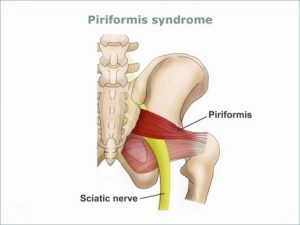
Piriformis syndrome is a painful condition that develops due to irritation or compression of the sciatic nerve near the piriformis muscle in the gluteal (bottom) area. The piriformis muscle runs from the sacrum to the outer part of the hip and travels across the sciatic notch (where the sciatic nerve travels through). It is here where the muscle and nerve are in close proximity to each other, hence why the nerve can become irritated and cause sciatic pain radiating down the back of the leg, in to the calf or foot. A Physiotherapy Assessment can determine if the cause of pain down the leg is in fact piriformis syndrome or another problem such as a low back disc bulge.

What are the causes of piriformis syndrome?

  • Muscle spasm in the piriformis muscle, either because of irritation in the piriformis muscle itself, or irritation of a nearby structure such as the sacroiliac joint or hip joint
  • Tightening of the muscle, in response to injury or spasm or an alignment issue (e.g. a leg length discrepancy or a spinal scoliosis)
  • Swelling of the piriformis muscle, due to injury or spasm
  • Bleeding in the area of the piriformis muscle.

Sometimes, the reason is unknown.

Treatment

Physiotherapy can help to address the cause and the symptoms of piriformis syndrome. For example, treatment to address the symptoms may include releasing or stretching the piriformis muscle itself or using acupuncture for example.

The cause also needs to be addressed. For example, if there is leg length discrepancy, an orthotic may be required to address the imbalance. Deep core stability and hip strengthening exercise to stabilise the hip, pelvis and spine may also be required.

Usually Physiotherapy helps to resolve the symptoms fully. Only in rare cases do people require other interventions such as surgery.

To arrange a home visit and get your rehab started ASAP, email us at office@silverphysio.co.uk or telephone: 020 3637 8988.
Injury Prevention

With the start of the new school year and with many ‘winter’ sports starting again, it’s time to talk about being injury free this season. Here are some simple key points that will help with injury prevention.

1. Warm up before exercise and ‘cool’ down after exercise. Warming up means raising the heart rate slightly so the muscles begin to ‘warm up’. Cooling down means slowly lowering the heart rate and allowing the muscles’ waste products (e.g. lactic acid) to be removed. Warm ups and cool downs should include gentle stretching and releasing of muscles and may also include a warm bath or shower after exercise. It’s also really important to keep hydrated (and to re-hydrate after exercise). Prior to starting exercise, stretches should be dynamic to “oil” the joints and afterwards, stretches should be static.

2. Too much repetition in training can lead to overuse injuries such as tennis elbow or achilles tendinopathy. Mix up your training. Try some Yoga or Pilates, head to the gym or swim. Training for your sport is vital of course but variety is a positive way to prevent injury.

3. Footwear and other sports gear – check you have the correct footwear. Make sure it is supportive and keeps your foot in a ‘good’ position. Make sure that you also use all the correct protective sports equipment relevant to your sport.

4. Do not push your body beyond your current fitness level. It takes time to build up fitness – it’s always best to continue with training or exercise over the summer period so that your fitness is maintained throughout the year.

5. Make sure you receive the appropriate coaching so that you can learn correct techniques if you are taking up a new sport.

And finally…do not play or train through pain!!

Stop and seek advice and treatment from a Physiotherapist. Playing or training through pain may make an injury worse and it may then take longer to recover from.

Call and make an appointment now with one of the physios at Silver physio on 020 3637 8988 to enable a personalized programme to be created.

Reduced mobility following hip surgery

Hip surgery of any kind can be painful and can cause mobility problems long after surgery has been completed. Surgical procedures include:

-Total or partial hip replacement

-Dynamic hip screw

-Femur fractures

Recovery will differ for each type of surgical procedure. Your consultant will advise you on healing times, positioning in bed, weight bearing status and return to activities like driving.

Your gait pattern may be affected due to the surgery, as pain is the most common complaint. It will also depend on the muscle strength before and after surgery.

You may be given a variety of different walking aids to help with mobility and recovery. Always ensure you use the equipment as prescribed and that it is at the correct height, as this will affect your gait pattern.

It is useful to know when you can take full weight on your leg and try to do so as soon as possible to avoid getting into bad habits. Some helpful tips include listening to your steps. Equal steps means there is equal weight on each leg. If you limp, it means you are probably taking less weight on the operated leg.

  • Try to walk with as much as possible with a normal gait pattern by getting your heels down on each step, then pushing off with your toes.
  • Avoid widening your legs or stance as this increases sideways waddle, which will reduce balance.
  • Lift your feet and do not shuffle with your feet. Make sure you wear secure footwear and avoid slip on shoes or slippers.
  • Do the exercises that you will get at hospital regularly and a physio will progress these exercises to include you standing on the operated leg whilst lifting the other leg. Your muscles will be weak and will need strengthening and therefore the exercises play a vital role in recovery.
  • If you have stairs at home, you will practise these in hospital if appropriate. Remember to go up with the GOOD leg and down with the BAD leg.

Silver Physio can help with mobility issues and returning to normal activities like showering or bathing following hip surgery. Please contact us an assessment and further advice. To arrange a home visit and get your rehab started ASAP, email us at office@silverphysio.co.uk or telephone: 020 3637 8988.

Deconditioning Awareness

Physiotherapists refer to ‘deconditioning’ as a state of the body following an episode of inactivity such as a hospital admission. For example, after a period of inactivity, symptoms such as muscle weakness, fatigue and lower levels of activity are common and result in the body being in a deconditioned state. Deconditioning in older people can even begin within hours of lying on a trolley or bed in A&E. According to the British Geriatrics Society (2017):

“up to 65% of older patients experience decline in function during hospitalisation. Many of these patients could prematurely end up in a care home because of ‘deconditioning’ and the loss of functional abilities in hospital”.

It is so important that all hospital staff encourage patients to keep moving as much as possible whilst they are in hospital. However, it is not always possible to be as active as one would like in hospital so many people are discharged home in a ‘deconditioned’ state, perhaps even with a care package in place.

This is where a Physiotherapy Programme is essential to enable patients to get back to their original pre-hospital state. This can even mean starting with basic bed strengthening exercises and progressing to getting out of bed and then to standing and walking. How quickly a patient can get back to ‘normal’ depends on many factors but it is possible. The muscles need to build up their strength again and also the cardiovascular system needs to be challenged in order to get fitness levels up. Physiotherapy programmes are tailored to each individual so if you need advice after a hospital admission, we are here to help you. We at Silver Physio specialise in home-based rehabiliation, which makes it easier once a patient returns home post hospital admission; one less thing for the patient and relatives to worry about.


A physiotherapist works with patients post hospiatl admissions or period of sickness to assess their individual physical difficulties and help improve movement and other function. Silver Physio have therapists that are highly experienced in managing this. Get in touch with us at Silver Physio on 020 3637 8988 or at office@silverphysio.co.uk for information on how we may be able to help you.

Asthma Update

Asthma is a chronic inflammatory disorder of the airways, in which airway inflammation contributes to airway hyper responsiveness, airflow limitation, respiratory symptoms, and disease chronicity. In 2011, 5.4 million people in the UK were having treatment for asthma; the cost of asthma to the NHS is around a billion pounds per year. Most of these costs are associated with accident and emergency attendances, both elective and non-elective admissions to hospital, and treatment costs. There may also be costs associated with a reduced capacity to work and social care costs for those people whose quality of life is severely affected by asthma.

With an increasing incidence of Asthma due to environmental factors such as air pollution, it is important for clinicians to be able to make fast and accurate diagnoses. An accurate diagnosis means that treatment can be tailored and the condition controlled more effectively. This, in turn provides the patient with a better long-term outcome.

A Niox Vero device is the latest technology being used that accurately measures the fractional exhaled nitric oxide (FeNO) levels in the breath and helps clinicians to make more accurate and speedy assessments of the patients’ needs. Using a Niox Vero device takes 6 seconds for children and 10 seconds for adults! It can only be used for children over the age of 6. Basically, it directly measures airway inflammation and therefore allows clinicians to determine the most appropriate and effective treatment. For example, the type of inhaler or steroid to prescribe. Other commonly used tests to monitor lung function in patients with asthma are spirometry tests. However, these types of tests indirectly measure asthma compared to the Niox Vero which measures actual inflammation. There are many exercises that can be used to reduce inflammation, as well as improve lung capacity.


Contact us at Silver Physio to see how we can teach you strategies to best manange your Asthma, as well as prevent acute infections on 0203 637 8988 or drop us an email on office@silverphysio.co.uk

ME in Action #millionsmissing

On Saturday 12th May, it was International ME Awareness Day. One of our Physiotherapists attended an awareness event in London called #millionsmissing. Here she writes about the meaning behind the event and explains what ME is and how Physiotherapy can help.

“ME or Myalgic Encephalomyelitis is close to my heart. My best friend has suffered with ME for 19 years. I have seen her daily struggle. I have treated patients with ME too and it is a condition that is poorly understood, under-funded, under-researched and often has a stigma attached to it, which I know for most ME sufferers is one of the most difficult things to deal with. To not be believed that you are feeling very unwell by Health Professionals adds to the isolation people with ME can feel.

NICE (National Institute for Clinical Excellence) have recognised that the physical symptoms of ME can be as disabling as multiple sclerosis, systemic lupus erythematosus, rheumatoid arthritis, congestive heart failure and other chronic conditions. Symptoms can include severe pain, extreme sensitivity to light and noise, cognitive impairment, orthostatic dysfunction (inability to regulate blood pressure), post-exertional malaise (feeling unwell after any activity), migraines, IBS, sickness and nausea, dizziness, unrefreshing sleep, fever and night sweats. “Symptoms follow a characteristic pattern of variability (often fluctuating throughout the course of a day) and chronicity. Patients will often describe how they experience ‘good days’ and ‘bad days’, with fluctuations in severity being influenced by physical activity, stress, infections and temperature excesses” (ME Association).

In severe cases of ME, people are bed bound for months or years. These people are missing from life, hence the #millionsmissing campaign. The campaign is to raise awareness that these people need urgent help and support. They need funding for biomedical research in order to find a way to diagnose and treat this debilitating condition. Here are some words from the people with ME who were missing from the event as they were at home, unwell in bed…

Graded Exercise Therapy (GET) is one of the most common ‘prescribed’ treatments for ME/CFS. However, there is significant evidence that for many people with ME/CFS, graded exercise leads to worsening symptoms and can even lead to a relapse. There is currently much debate around the evidence for GET, with the General Medical Council being urged to investigate the many flaws that have been found in a UK trial called PACE, which advocates both CBT (Cognitive Behavioural Therapy) and GET for ME/CFS patients.

When it comes to Physiotherapy for people with ME/CFS, a careful assessment is required. Pushing someone too much can make things worse so each session must be carefully monitored. Programmes need to be tailored for each individual depending on the severity of their condition.”

At Silver Physiotherapy, be assured that we understand this condition and we will listen to and work with your body. We will not push you beyond your limitations.

Call us now on 02036378988 to book an appointment now so that SilverPhysio can tailor you treatment of ME.

What is Myofascial Release? – Its fascianting!!

What is fascia? (pronounced fash ia). This is what we are all made of. Fascia is our connective tissue. It is a 3-dimensional, whole body system that joins us together, much like a knitted body suit. It is like a spider’s web, with no beginning or end. Fascia exists in what is known as the fourth phase of water, somewhere between liquid and solid. When it tightens through injury, surgery, stress or inflammation, it solidifies and sticks together, becoming restricted and causing pulls, strains and tensions throughout the body. In fact, fascial restrictions can produce tensile pressures of approximately 2,000 pounds per square inch on pain sensitive structures that do not show up in many of the standard tests (x-rays, MRIs, CAT scans etc). This can cause a variety of problems including chronic pain (anywhere in the body), restricted movement, circulatory problems and fatigue.

Myofascial release (MFR) is therefore a whole body treatment approach that releases these restrictions, eliminating the pressure and relieving symptoms. John F Barnes (JFB) is the founder of a particular whole-body approach to MFR, which is a very gentle, safe, hands-on treatment which can have profound results, both physically and emotionally. The Physiotherapist uses different hands-on techniques to enable the fascia to relax. This could be a sustained hold where the therapist exerts gentle pressure into the skin and fascia until the tissue releases. The therapist may also use distraction techniques, where your leg, arm or neck is held and gently distracted (pulled) until the tissue releases.

Because of the gentle nature of this treatment, sessions are a minimum of 1 hour. This allows the body to fully relax and release the restrictions which are causing symptoms, such as pain.

At Silver Physio we are able to provide you with an assessment of your fascial system and treatment to address the restrictions that are causing your symptoms. Contact us now on 020 3637 8988 to find out more.

The circulatory system – Swollen Legs

Our circulatory system is a complex network of the heart, lungs, veins, arteries, lymph glands and other systems to help our bodies cope with daily life.  There are varying degrees of swelling in the legs and usually the body copes well in managing a water balance.  This is however more difficult if you have heart problems, breathing conditions or circulation problems like diabetes and Raynaud’s disease to name a few.   If you had recent surgery, your legs may also be more at risk of swelling due to inactivity or pain.

Having swollen legs can cause various problems including DVT, ulcers, cellulitis and in worse cases gangrene or necrosis.

As we get older, our circulation systems can deteriorate.  Inactivity and loss of mobility remains the main culprit in causing swelling in the lower limbs.  We all need to be aware of how we move and even sit.  It is not recommended to sit with your legs crossed as this cuts off the circulation.

When flying over the holidays, make sure you move around regularly and you may benefit from compression stockings to help reduce the risk of DVT.  Changing your position regularly helps to relieve pressure and allows the muscles and veins to circulate fluid and blood.

If you already have very swollen legs, you may need to speak to your GP regarding diuretics to reduce the swelling.  It may be necessary to get the legs bandaged to reduce swelling.  Always inspect your legs for any broken skin as it could lead to infection and leg ulcers.

Try to elevate the legs at times to help with circulation but make sure you change your position regularly.  Keep moving and walk short distances more often.

Those with a sedentary lifestyle may be more at risk of developing swollen legs and complications.  Physiotherapy can support by teaching exercises, massage and improving mobility to reduce circulatory problems.  Our physiotherapists at Silver Physio can advise you on how to prevent circulation problems or manage it.   Please contact us at Silver Physio for more tailored advice.